


Highlights from The Workspace Design Show 2026

Author
Evelyn Gallagher
Evelyn Gallagher

The Workspace Design Show gave our strategic consultants two days to step back, listen, learn, and connect.
With a packed schedule of talks, forums, and product showcases, featuring developers, architects, designers, AI specialists, occupiers, and agents, the event was inspiring and full of energy.
Focusing on the Workspace Design Talks and Occupiers Forum, these were the key discussion points from the event: –

We were relieved to hear that; the office is not dying – it’s being redefined. No longer a default container for desks and task-based work, it’s evolving into a purposeful destination centred on culture, cohesion and shared experience.
While technology and AI have enhanced efficiency, they’ve also exposed a deficit in human connection that digital environments can’t fully replace. The enduring value of the workplace lies in its ability to foster trust, belonging, spontaneity, and cultural identity through physical presence and analogue interaction.
Critically, it creates the conditions for psychological safety – spaces where open feedback, informal conversations, and shared problem-solving can flourish – strengthening culture from the inside out.
As part of the ‘Networks as Workplaces: When the Community Becomes the Platform for Physical x Digital Workplace Innovation’ talk Helen Hughes of Savills explained – in an increasingly digital world, the office provides the essential dose of “Vitamin S” (social connection) that supports wellbeing, confidence, and collective resilience.
As work becomes more flexible and distributed, the office succeeds not by mandate, but by offering meaningful human experiences that home and screens can’t replicate.
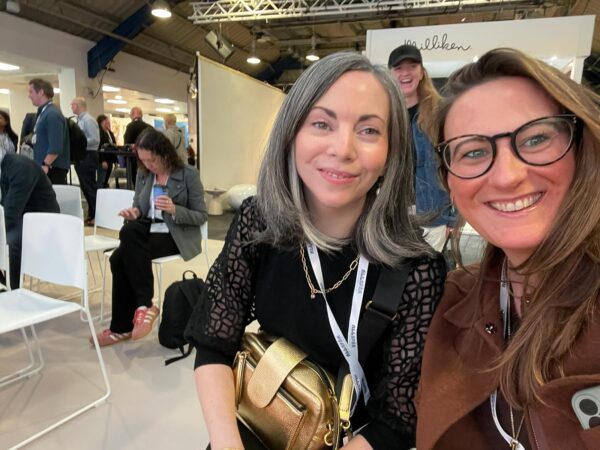
Evelyn Gallagher and Lucy Galloway, MLA
‘If the office is dead, why are we still designing it?’ delivered a clear message from Julian de Metz of DMFK that ‘premises = culture’
Speaking about their recent HQ project in London it was clear that culture and space shape one another in a continuous feedback loop. The workplace expresses organisational identity while simultaneously influencing behaviour, collaboration, and shared purpose.
When space aligns with values, it strengthens belonging and reinforces how people are expected to work. When it doesn’t, it quickly becomes underused or disengaged.
In a hybrid world, attendance is no longer assumed – it’s chosen. People now expect autonomy and the ability to shape their working day. The office is competing directly with the freedoms, comfort, and control experience of working from home.
To draw people in, workplaces must offer genuine agency and variety: a curated mix of settings for focus, teamwork, privacy, and social connection, alongside the flexibility to move between them.
By empowering individuals to decide how and where they work best, organisations not only reflect their culture but actively enable it. Transforming the office into a place people want to attend supports both performance and personal freedom.
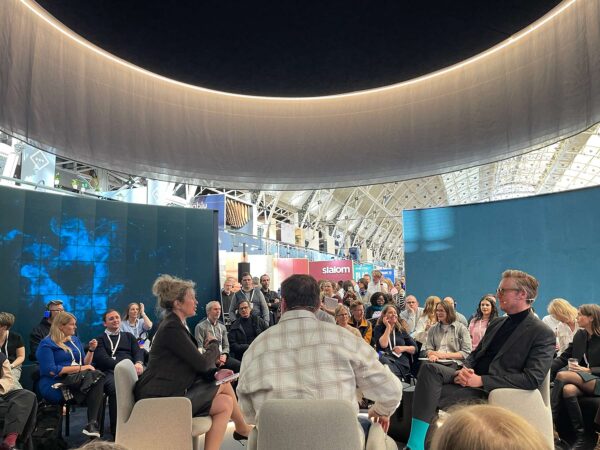
The era of one-size-fits-all workplace design is over. Fixed desk ratios, uniform layouts, hierarchical space, and generic fit-outs no longer reflect how people work.
However, while data and AI provide insights on occupancy and user patterns, they can’t capture the human experience.
Chris Moriarty noted during the ‘From Data to Brief – How Evidence is Shaping Better Workplace Experience’ talk, visiting the Booking.com HQ in the Netherlands revealed the impact of entering its impressive atrium. Something data alone would have flagged as inefficient, created a meaningful sense of arrival experience.
Human interpretation, cultural understanding, and critical thinking are essential to turn analytics into effective design. Combining quantitative data, AI scenarios, and qualitative insight enables responsive, inclusive, and engaging workplaces. Replacing standardisation with evidence-informed creativity reflects the needs, behaviours, and aspirations of those who use them.
Strong workplaces don’t start with flashy innovation. Because with the fundamentals done right – good light, fresh air, acoustic comfort, functional furniture, and spaces to focus or connect – these basics are the backbone of a truly effective, human-centred environment.
‘Exploring change in the Legal Workplace: Decoding the Human Algorithm’ , strengthened the argument for designing for the overall experience. It would be “really sad if we are designing everything for efficiency” noted Michelle Marwood, Real Estate Director for, Norton Rose Fulbright.
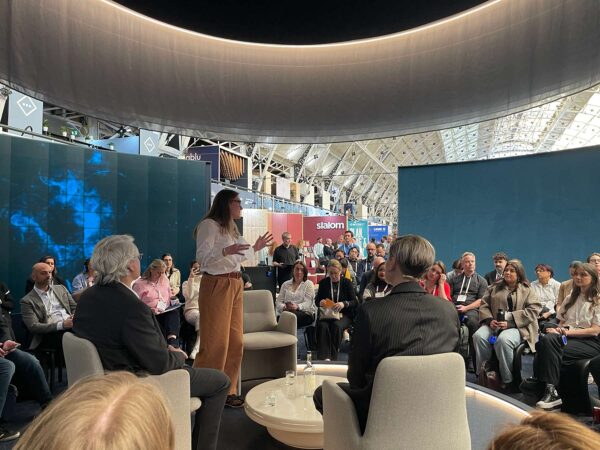
Relationships, experiences and behaviours are the framework which the physical spaces and design support. Get this engagement programme working well and the design will be the enabler of change. Successful workplaces are shaped by end-user behavioural adoption.
Organisations often underestimate the scale of behavioural transition, and engagement is rarely early enough, risking the effectiveness of even well-designed spaces. Cultural change must be iterative, supported by ongoing feedback, leadership sponsorship, and gradual reinforcement of new ways of working.
Allowing and recognising change is messy, will only make the project more of a success!
Inclusion is central, with almost every panel noting the invaluable role of internal diversity groups as co-creator sounding boards to ensure all perspectives are considered.
At the ‘Balancing Sustainability, Tenant Needs and Viability’ discussion, Landsec’s Olly Hunt and Harry Foster highlighted that engagement at this level strengthens relationships between clients, end users, and design teams, building trust and collaboration.
Designing for accessibility, diversity, and psychological safety ensures all users feel valued. And continuous feedback and iterative design create workplaces that remain relevant, equitable, and adaptive, fostering performance and belonging.
We doubt it was by coincidence that the final talk Inclusive and diverse workplaces; A reality or are they just a good story?” underlined the importance of universal design. And not only from an end-user perspective but equally inherent in guiding the project team make-up and principles.
Alex Lawlor, from AtkinsRealis concluded by encouraging us to challenge the industry, “If you’re not making your workplace inclusive, why not?”
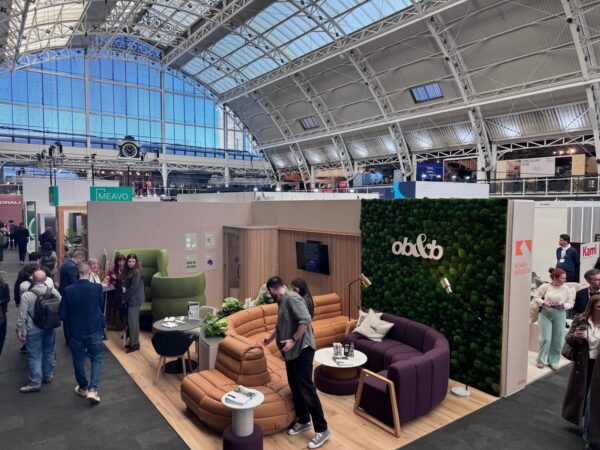
OB&B stand at The Workspace Design Show
Future-ready workplaces are designed to adapt and endure over time. This means considering long-term material lifecycles, flexible base builds, and planning beyond lease timeframes to ensure spaces remain relevant as organisational needs evolve.
At the ‘Workspace cross-pollination: Public vs Private sector innovation’ discussion we heard Sophie Morgan of Landsec talk about aiming for bases builds that have a 100-year life cycle. Building in timelessness to CAT A design avoids continuous de-laps and fit out cycles. We should be designing beyond the lease duration.
Flexibility allows offices to accommodate changing team sizes, hybrid work patterns, and new ways of collaborating, while also integrating sustainability and social value considerations.
By designing with both adaptability and durability in mind, organisations can create environments that continue to support culture, productivity, and user experience for decades, remaining valuable and resilient in a rapidly changing world.
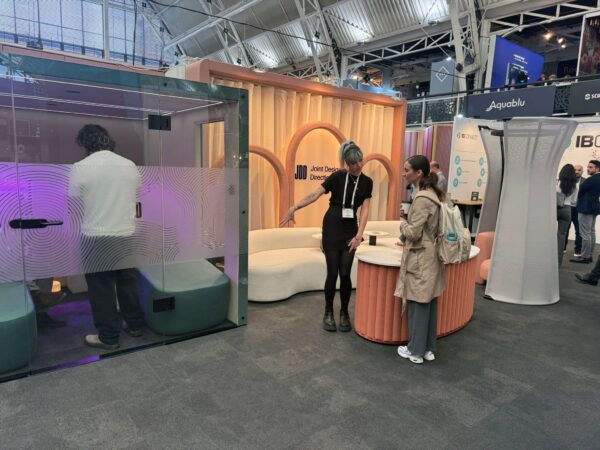
JDD at The Workspace Design Show